
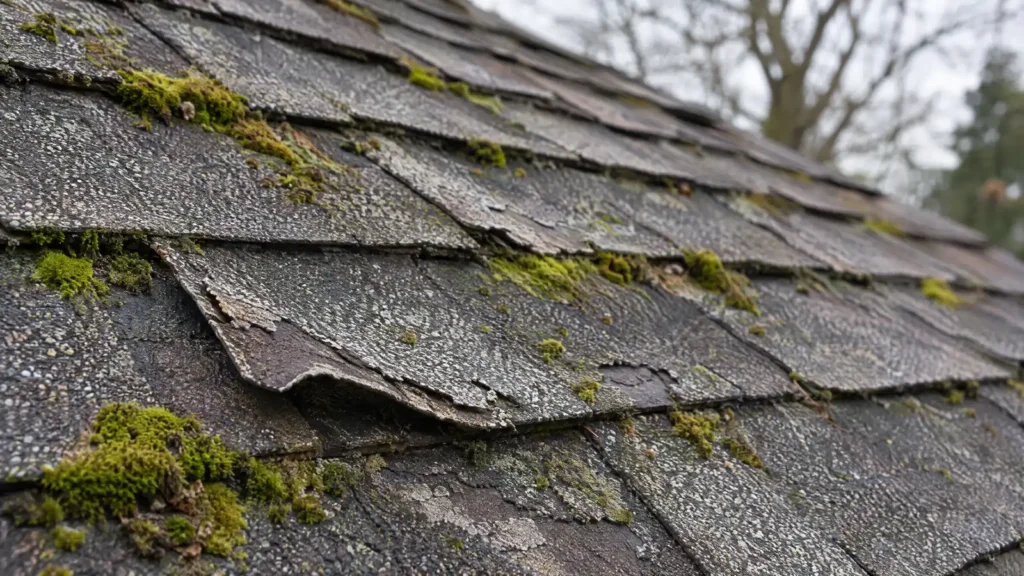
You probably need a new roof, not just a repair, when the warning signs are spread across the roof instead of sitting in one spot: curled or cracked shingles on several slopes, heavy granule loss with bare patches, leaks that come back after repairs, or a sagging deck. One isolated sign usually calls for a repair and a closer look.
Late fall, once the leaves are down and before the first snow, is a good time to look. You can check most of these signs without setting foot on the roof. You need three vantage points: the yard with binoculars, the attic with a flashlight, and the gutters you already clean.
How do you check your roof without climbing on it?
Start from the ground. Walk around the house on a clear day and look at each slope with binoculars, then look at the roofline from across the street. A healthy ridge reads as a straight line, and shingles should lie flat in even rows.
Then go into the attic on a dry afternoon, and again after a heavy rain if you can. Keep your weight on the joists, not the ceiling drywall between them, and use a flashlight on the underside of the roof deck. Last, look in the gutters and at the downspout outlets, where the shingle surface ends up as it wears. Planning to add panels later? Our guide to what solar panels cost explains why roof age matters first.
Which signs suggest the whole roof is wearing out?
No single symptom proves you need a new roof. What matters is how widespread it is and whether it keeps coming back. These signs carry more weight when you see them on more than one slope.
- Curling, cupping or buckling shingles. Edges that lift or rows that ripple show the shingles are losing their shape. Across large sections, that is advanced wear. On one slope only, ask the roofer to check attic ventilation, because trapped heat and moisture can cause it and new shingles over the same attic can fail the same way.
- Bald patches plus heavy granules in the gutters. New shingles shed some loose granules in the first few rains, so a little grit on a new roof is normal. On an older roof, dark bare patches combined with a growing pile of granules each season mean the protective coating is wearing through.
- Cracked or brittle shingles in many places. A few cracked tabs after a windstorm are a repair. Cracking spread across the field of the roof is wear.
- Leaks that return after repair. If a roofer fixed one leak and another appears somewhere else, or the same one comes back, the problem is likely beyond a single spot.
- Daylight through the roof boards. Pinpoints of light in the attic mark gaps where water can follow.
- A sagging ridge or soft deck. A dip in the roofline or boards that bow between rafters point to the structure under the shingles. Treat this as urgent and have a licensed roofer look soon; some cases need a structural engineer.
- A patchwork of past repairs. Several mismatched sections often mean the roof has been fixed piece by piece for years.

Which signs usually mean a repair instead?
- A few missing or torn shingles in one area after wind
- A leak at one chimney, skylight or vent, where flashing or a pipe boot has failed
- Dark streaks from algae, which are mostly cosmetic and call for cleaning, not new shingles
- A small patch of moss, which holds water against the shingles and should be dealt with before it spreads
- One damaged section from a fallen limb on a roof that otherwise looks sound
Use this table as a screening tool before a professional visit. It is not a diagnosis of your house.
| Sign | Where to look | Often points to | Sensible next step |
|---|---|---|---|
| Granules in gutters | Gutters, downspout outlets | Shingle surface wearing thin | Photograph it each season and compare |
| Curling or buckling | Yard, with binoculars | Wear, or poor attic ventilation | Ask for an attic ventilation check |
| Ceiling stain | Top-floor ceilings, near chimneys | Active or past leak | Trace and date it; rule out plumbing |
| Daylight in attic | Underside of roof deck | Gaps in the roof covering | Roofer visit soon |
| Damp or matted insulation | Attic floor | Leak path or trapped moisture | Find the source before replacing insulation |
| Sagging ridge or deck | Street view and attic | Weakened decking or framing | Urgent professional inspection |
| Icicles and ice ridge at eaves | Roof edge in winter | Ice dams from attic heat loss | Check insulation and ventilation |
What should you look for in the attic?
The attic is where roof problems show up first, often months before a stain reaches a ceiling. Look for dark or damp spots on the rafters and the underside of the deck, water trails along nails, and insulation that is wet, flattened or discolored in one area.
Pay attention to smell. A musty odor is often the first sign of moisture. The EPA links hidden mold above ceilings to roof leaks or insufficient insulation, and it notes that condensation can be a sign of high humidity. Frost or droplets on the underside of the deck in winter mean moisture is building up in the attic itself. That can come from humid house air or weak ventilation rather than the shingles, which changes who should fix it.
What do ceiling and wall stains tell you?
Roof leaks usually show up as yellow or brown rings, sometimes with bubbling paint, on top-floor ceilings and the upper parts of walls. A stain near a chimney, vent pipe or skylight points toward flashing. A stain under a bathroom or along a pipe run may be plumbing, so have that ruled out before you blame the roof.
Trace a light pencil line around the stain and write the date next to it. Say the stain measures 5 inches across today and 8 inches after the next two storms. That is 3 inches of growth, or 60 percent, and it only grew when it rained. That pattern is strong evidence that water is getting through the roof covering or flashing, and it gives the roofer something concrete to work from.
Once water is coming in, speed matters. The EPA says to dry water-damaged areas and items within 24 to 48 hours to prevent mold growth, so stop the water and dry the area even before you settle on a repair or a replacement.
What do the gutters and roof edge tell you?
Your gutters collect what the roof sheds. Look for granules, bits of shingle and, after storms, pieces of flashing. Gutters that overflow, sag or pull away from the fascia can push water behind the roof edge and into the wall, which looks like a roof leak from inside. The gutter cleaning guide covers cleaning and repairs.
In snow country, watch the eaves in winter. The National Weather Service explains that ice dams form when snow melts during the day and refreezes overnight, and that melt water can then work under shingles and, after repeated cycles, reach the attic, ceilings and walls. Large icicles and a ridge of ice along the eaves are the visible sign.
Is roof age a sign by itself?
Age is context, not a verdict. No federal agency sets an age at which a roof must be replaced, and an older roof in good condition can outlast a newer one that was poorly installed or poorly ventilated. Age helps a roofer interpret what they see, so it is worth finding out.
- Closing documents and seller disclosures from your purchase
- The home inspection report from when you bought the house
- Roofing permits on file with your local building department
- Receipts or warranty papers from a previous owner
If you find the roof is older than you thought, use that as a reason for a closer inspection and written findings, not as proof that it must come off.
Can rising energy bills point to the roof?
Sometimes, but the shingles are rarely the first suspect. Higher heating or cooling bills more often come from thin attic insulation, air leaks into the attic or the equipment itself. ENERGY STAR says sealing and insulating the home lowers the chance of ice dams on the roof and eaves in snowy climates, which is one place where the attic and the roof problem meet. Check insulation and air sealing before anyone sells you a roof to fix a utility bill.
Why is one sign not a verdict?
The same symptom can mean very different things. A single curled slope may be a ventilation problem. A ceiling stain may be a pipe. Granules in the gutter of a two-year-old roof may be normal shedding. That is why the next step after spotting a sign is a written assessment with photos, not a signature.
From the marketing side, I have watched roofing ads use these same signs as hooks, because a homeowner who has just noticed a stain is ready to book a visit. A visit that starts as a free inspection is still a sales appointment, which is covered in the free inspection sales pitch. After a storm, the FTC also warns that unlicensed contractors and scammers often appear in recovery zones and that you should never sign your insurance check over to a contractor.
What should you do after you spot a sign?
- Document it. Take dated photos from the ground, the attic and inside, and trace any ceiling stain.
- Stop active water. Use buckets, move belongings, and dry wet materials quickly. A temporary tarp from a roofer can protect the house while you get bids.
- Rule out other sources. Have plumbing checked if the stain sits under a bathroom or near pipes.
- Call your insurer if a storm caused it. Ask how your policy treats the damage before you sign with a contractor.
- Get at least two written assessments. Ask each roofer to state repair or replace, why, and to include photos of the problem and the decking. This guide to deciding between a repair and a new roof shows how to compare what they tell you.
- Vet whoever you hire. Check license, insurance and contract terms using the roofing contractor checklist.
- Keep up the roof you have. Simple seasonal checks in these roof upkeep habits help you catch the next sign earlier.
Frequently asked questions
Can I tell if I need a new roof without climbing on it?
Usually you can get a solid first read from the yard with binoculars, the attic with a flashlight and the gutters. A licensed roofer should confirm what you find before you decide.
Do granules in my gutters mean I need a new roof?
Not by themselves. New shingles shed some granules early on, but a growing amount each season combined with dark bare patches on an older roof suggests the shingle coating is wearing through.
Does a water stain on my ceiling always mean a roof leak?
No. Stains under bathrooms or along pipe runs can be plumbing. Trace and date the stain; if it grows only after rain, the roof or its flashing is the likely source.
Is a sagging roofline an emergency?
Treat it as urgent. A dip in the ridge or boards that bow between rafters can point to weakened decking or framing, so have a licensed roofer, and possibly a structural engineer, look soon.
How old does a roof have to be before it needs replacing?
No federal rule sets an age. Condition matters more than the calendar, so use age to decide when to get a closer inspection, not as proof that the roof must come off.