
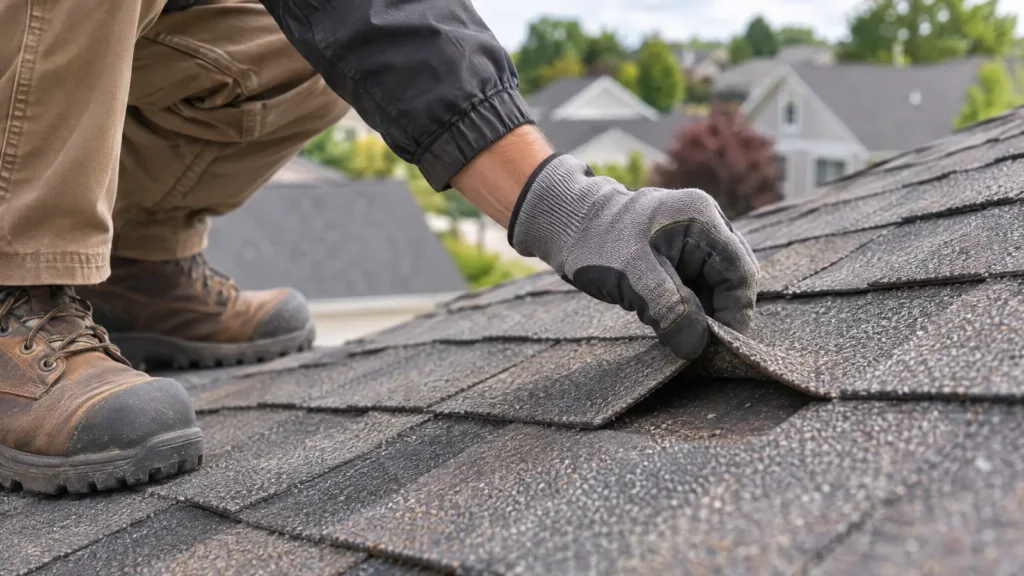
A free roof inspection costs nothing at the door. It can cost you later through what you sign afterward: a contract, an insurance authorization or a financing offer. The person inspecting is usually the person selling, so treat the visit as one interested opinion. And never sign your insurance check over to a contractor, which the FTC specifically warns against.
Picture the morning after a hailstorm. A truck pulls up, someone offers to check your roof for free, and twenty minutes later there is a clipboard on your kitchen table. Plenty of these visits are honest. The risk sits in the pace and the paperwork that follow. State rules add protections that vary a lot: in 2024 the Illinois Attorney General reminded residents that contractors there must provide a written contract for repair work over $1,000. Here is how these offers work, what they can cost, and how to use one without getting locked in.
Why do roofers offer free inspections?
Because the inspection is where the sale starts. In the home services lead campaigns I have seen priced and sold, the free inspection is a marketing cost. The ad buys an appointment, and the appointment is where the estimate, and often the contract, happens. That does not make the roofer dishonest. It does mean the person on your roof has a reason to find work.
A free inspection is still good for one question: is there a problem worth looking into? It is weaker on the second question, which is whether you need a repair or a whole new roof. That call deserves a second written opinion, and this guide to repair versus replacement explains how to compare the answers.
What does a storm-chaser inspection look like?
After severe weather, the FTC says unlicensed contractors and scammers often appear in recovery zones, and that a contractor who will not put license, insurance or contract details in writing is a red flag. Its home improvement guidance lists other warning signs: knocking on doors because they happen to be in the area, pressing for an immediate decision, asking for payment up front or in cash, and asking you to get the building permits. Our guide to which projects need a permit explains why that last one matters.
In practice the pattern is easy to spot once you know it. A knock or a flyer shows up within days of a storm, with an offer to check for hail or wind damage at no charge. Then comes urgency about a crew leaving town or a claim deadline, and a push to sign the same day. The pitch may include handling your insurance claim, meeting the adjuster for you, or covering your deductible. The payment request runs large: a big deposit, cash, a payment app or a wire. And the license or proof of insurance is somehow hard to produce.
The Illinois Attorney General warns residents to be wary of contractors who go door to door offering repairs or free inspections, and says scam artists may pose as public adjusters offering free inspections in order to file claims with a homeowner’s insurer.
What can a free inspection cost you later?
The inspection is rarely the expensive part. The money moves later, often at the kitchen table right after the roofer comes down the ladder. This table shows where.
| Where it can cost you | What happens | What protects you |
|---|---|---|
| Your insurance check | Signing it over hands the contractor your leverage | The FTC says never sign it over; ask your bank about a Certificate of Completion |
| Control of your claim | A contractor steps between you and your insurer | Call your insurer yourself and let its adjuster inspect |
| Your deductible | An offer to waive it can break state law | Ask your insurer before accepting any deductible offer |
| A deposit | Money paid up front can be hard to get back | Pay in stages, by credit card or check |
| Financing | Contractor-arranged loans you did not compare | Shop loan terms yourself |
| Scope of work | A full replacement sold on one opinion | A second written estimate |
The insurance check. The FTC says never to sign your insurance check over to a contractor. It suggests arranging a Certificate of Completion through your bank or credit union instead, so the contractor is paid in stages after you approve each one.
The claim. Your insurer will usually send its own adjuster. The Illinois Attorney General notes that the insurer’s adjuster comes at no additional cost, while public adjusters do not work for your insurance company and may charge fees. In Texas, the Texas Department of Insurance says a roofer or contractor cannot act as a public insurance adjuster on a claim for work it is also doing.
The deductible. Texas makes it illegal for a contractor to offer to waive, rebate or absorb a policyholder’s deductible. It also requires contracts of $1,000 or more that involve an insurance settlement to include a notice that the policyholder must pay it. Other states have their own rules.
The deposit and the loan. The FTC says not to pay the full amount up front, notes that some states limit down payments, and says to pay by credit card or check, never by wire transfer, gift card, payment app, cryptocurrency or cash. It also warns against financing through your contractor without shopping around, and lists a push toward a lender the contractor knows as a scam warning sign.
Here is the deductible math with made-up numbers. Say your insurer approves $14,000 for roof damage and your policy has a $2,000 deductible. The insurer’s share is $14,000 minus $2,000, or $12,000, and the $2,000 is yours. A contractor who offers to make that $2,000 disappear is offering something Texas law prohibits, and your own policy terms still apply wherever you live. Your actual payout depends on your policy, so confirm the numbers with your insurer.
What cancellation rights do you have?
Federal and state rules can give you a short window to back out, but the details decide whether they apply. The FTC’s Cooling-Off Rule covers many sales of $25 or more made at your home. You can cancel for a full refund until midnight of the third business day after the sale. Saturday counts as a business day; Sundays and federal holidays do not.
Count it out before you sign. Sign on a Monday in a week with no holidays, and you have until midnight Thursday, which is the FTC’s own example. Sign on a Thursday, and day one is Friday, day two is Saturday and day three is Monday, so the deadline is midnight Monday. The seller must give you two cancellation forms and a dated contract or receipt explaining your right to cancel.
The exceptions matter for roofs. The rule does not cover sales needed to meet an emergency, or home repair or maintenance you asked for, though extra purchases beyond what you requested are covered. State law can add more. The Illinois Attorney General says a contract signed because of a contractor’s visit to your home can be canceled within three business days, and that for disaster repairs you can cancel within five days of your insurance carrier’s denial.
How do state rules on roofers differ?
Licensing, registration and insurance-claim rules for roofers are set state by state. These three examples show how far apart they can be. Check your own state attorney general or consumer protection office for the rules where you live.
| State | Rule | Source |
|---|---|---|
| Illinois | Roofers must be licensed by the state professional regulation department; written, signed contracts for repair or remodeling work over $1,000; public adjusters licensed by the Department of Insurance | Illinois Attorney General consumer alert, March 2024 |
| Kansas | Roofing contractors need a registration certificate from the Attorney General; consumers can check the AG’s online directory and should get at least three written estimates | Kansas Attorney General consumer alert, July 2023 |
| Texas | Contractors cannot act as public adjusters on jobs they are doing; waiving, rebating or absorbing a deductible is illegal; deductible notice required on insurance-related contracts of $1,000 or more | Texas Department of Insurance, updated March 2025 |
The Kansas Attorney General suggests asking your roofer for a copy of the registration certificate, then confirming in the state’s online directory that it is still active. That habit works anywhere: get the license or registration number, then check it yourself with the state or county.
Free, paid or second-opinion inspection: what do you give up?
| Option | What you gain | What you give up |
|---|---|---|
| Free inspection from a roofer | No cost, fast scheduling, an estimate on the spot | Independence, since the inspector also sells the fix |
| Paid independent inspection | An opinion with no repair sale attached | A fee and possibly a wait |
| Free inspections from two or three roofers | Several estimates to compare | Time, and more sales pressure to manage |
| Your own check from the ground and attic | No cost and no pitch | You miss what cannot be seen from below |
Your own look is a good first filter. Our roof self-check guide covers what you can safely check from the yard, the attic and the gutters, so you know what to ask the inspector to show you.
Before you sign: how to use a free inspection without getting locked in
- Verify before the visit. Ask for the license or registration number and check it with your state or county. Search the company name with words such as complaint or scam.
- Ask for photos of your roof. Pictures should show your house in the frame, with each problem marked.
- Sign nothing on the first visit. That includes inspection forms that authorize the company to deal with your insurer. The FTC says not to sign documents you have not read, that are blank, or that are in a language you do not understand.
- Call your insurer yourself. Report storm damage directly, ask how the claim and its deadlines work, and let the insurer’s adjuster inspect.
- Get a second written opinion. Use a contractor you found on your own, or pay for an independent inspection.
- Compare written estimates. The FTC says not to automatically take the lowest bid and to ask for an explanation when prices differ a lot.
- Read the contract. The checklist in our roofer hiring guide covers license number, dates, payment schedule, cancellation notice and blank spaces.
Once the roof is sound, a few seasonal checks make the next storm less stressful. These seasonal roof checks help you know what normal looks like before anyone knocks.
What if something already went wrong?
The FTC suggests trying to settle the problem with the contractor first, then following up phone calls with a letter sent by certified mail with a return receipt, and keeping copies. If that fails, contact your state attorney general or local consumer protection office. The FTC also asks people to report suspected scams at ReportFraud.ftc.gov.
Frequently asked questions
Are free roof inspections a scam?
Not necessarily. Many are legitimate sales appointments. The risk is signing a contract, an insurance authorization or a financing offer before you have a second opinion and have talked to your insurer.
Should I let a roofer handle my insurance claim?
Call your insurer yourself and let its adjuster inspect. Rules vary by state; Texas, for example, does not allow a roofer to act as a public adjuster on a job it is doing.
Can a roofer pay my insurance deductible?
In Texas it is illegal for a contractor to offer to waive, rebate or absorb your deductible. Rules differ elsewhere, so ask your insurer before accepting any such offer.
Can I cancel a roofing contract I signed at home?
Often, but it depends. The FTC Cooling-Off Rule gives three business days for many home sales of $25 or more, with exceptions for emergencies and repairs you requested, and some states add their own rights.
How do I check whether a roofer is licensed?
Ask for the license or registration number and confirm it with your state or county. Some states, such as Kansas, keep an online directory of registered roofing contractors.

Tier 1 Sources
- FTC: How to Avoid Scams After Weather Emergencies and Natural Disasters
- FTC: How to Avoid a Home Improvement Scam
- FTC: Buyer’s Remorse: The FTC’s Cooling-Off Rule
- Illinois Attorney General: Storm-related repair scams consumer alert (March 2024)
- Kansas Attorney General: Storm damage could attract illegal contractors (July 2023)
- Texas Department of Insurance: Roofing and insurance, know the law