
Two habits prevent most plumbing damage: know where your main water shutoff is, and fix small leaks before they grow. EPA WaterSense’s 2026 Fix a Leak Week page says leaks in an average home can waste more than 9,300 gallons of water a year, and fixing easily corrected leaks can save about 10 percent on water bills.
With the first hard freeze coming to much of the country, this is a good month to walk the house with a flashlight. Most leaks you can fix yourself sit at a fixture: a worn toilet flapper, a dripping faucet, a loose supply line under a sink. The expensive ones start in main lines, inside walls or at a gas water heater, and those belong to a licensed plumber.
How do you find and use your main shutoff valve?
The main shutoff stops all water coming into the house. It is usually near where the supply line enters, such as a basement or crawlspace wall, a garage, a utility closet or near the water meter. In some homes a second valve sits at the meter itself, which may belong to the water utility.
The FEMA home winterizing guide tells homeowners to learn how to shut off the main water valve in case of emergency. You do not want to learn it at 2 a.m. with water on the floor, so do it now.
- Find it and label it. Tag the valve and make sure every adult in the home knows where it is.
- Know the type. A lever handle usually closes with a quarter turn. A round wheel handle usually needs several turns clockwise.
- Keep the path clear. Do not store boxes in front of it, because you may need it in the dark with water on the floor.
- Check that it works. If the valve is stuck, corroded or leaks when turned, have a plumber replace it instead of forcing it.
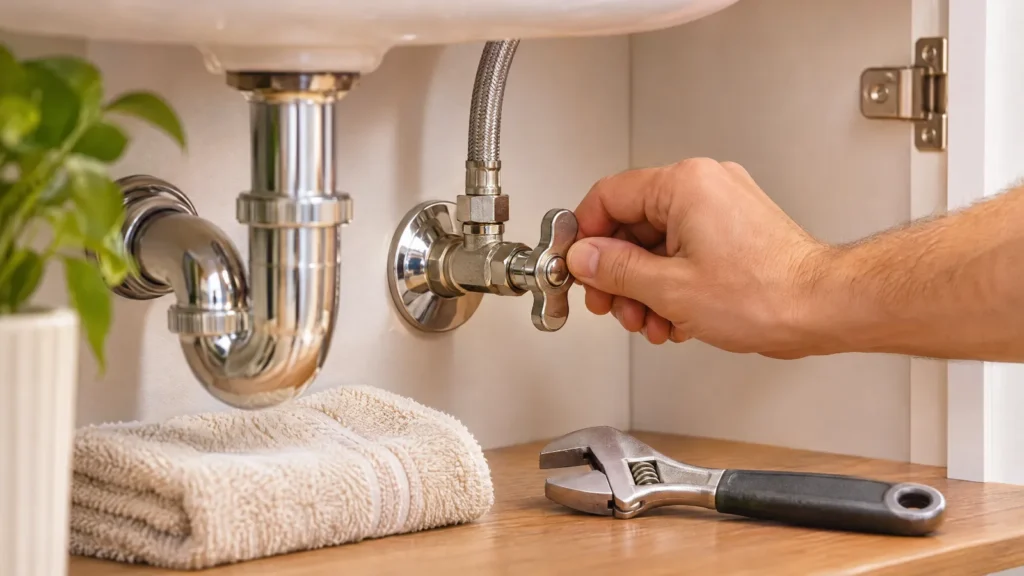
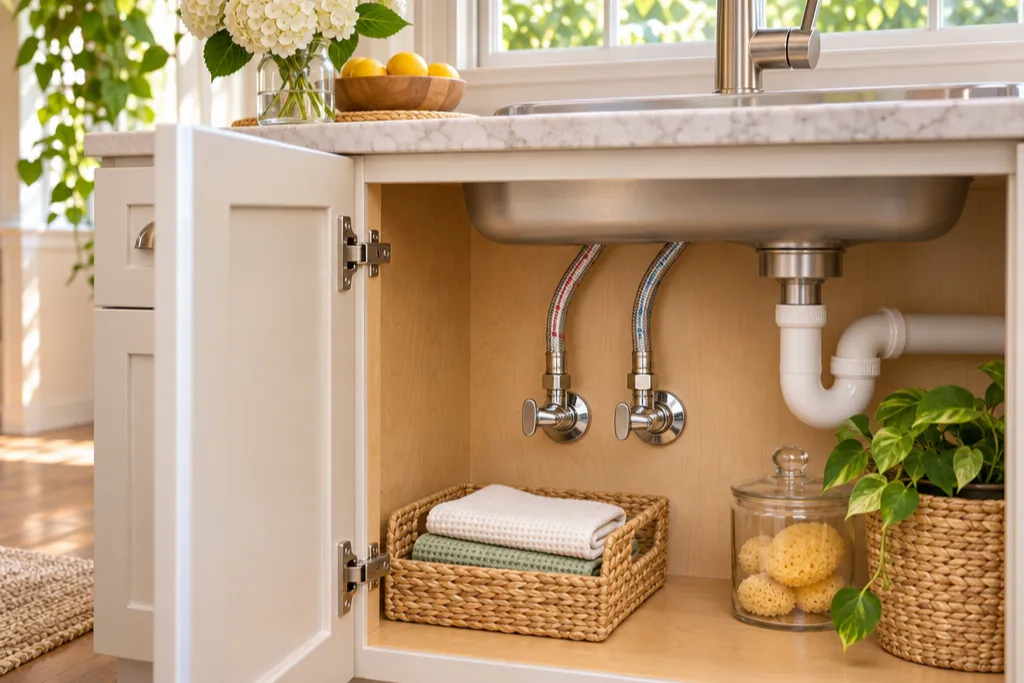
- Find the fixture valves too. Small stop valves under sinks and behind toilets let you shut off one fixture without cutting water to the whole house.
How do you check your home for leaks?
WaterSense describes two simple tests. For a whole-house check, read your water meter before and after a two-hour period when no water is being used; if the reading changes, water is going somewhere. For toilets, add a few drops of food coloring to the tank, and if color shows up in the bowl after 10 minutes, the flapper is leaking.
| Leak | What WaterSense says it can waste | What to check |
|---|---|---|
| Faucet dripping once per second | More than 3,000 gallons per year | Washer, O-ring or cartridge |
| Showerhead dripping 10 times per minute | More than 500 gallons per year | Connection, washer or valve |
| Toilet flapper | Silent leaks between flushes | Dye test; WaterSense says to replace flappers at least every five years |
| All leaks in an average home | More than 9,300 gallons per year | Meter test with all water off for two hours |
Here is what that can mean in dollars, with hypothetical rates. Say your water and sewer charges together come to $10 per 1,000 gallons. A faucet wasting 3,000 gallons a year costs about $30, and the 9,300 gallons WaterSense cites for an average home’s leaks would cost about $93. Your rate will differ, so check your own bill. The bigger cost is usually the water damage a leak causes, not the water itself.
Look under every sink, around each toilet base, near the water heater and behind the washing machine with a flashlight. Stains, soft cabinet floors, warped trim and musty smells are signs of a slow leak that has been running a while. Air conditioners leak too, and our guide to air conditioning problems covers clogged condensate drains.
Do it yourself or call a pro: which plumbing jobs are yours?
Most fixture fixes come down to closing a small valve and swapping a worn part. Main lines, gas and anything inside a wall are different. A mistake there can cost far more than the service call you were trying to save.
| Job | Reasonable DIY? | Why |
|---|---|---|
| Replacing a worn toilet flapper | Usually yes | Shut the fixture valve, drain the tank, swap the part |
| Replacing a faucet washer or O-ring | Usually yes | A common cause of drips, done with the water off |
| Clearing a sink or toilet clog with a plunger or hand auger | Usually yes | Mechanical clearing that stays at the fixture |
| Cleaning a clogged faucet aerator | Usually yes | Low flow at one tap is often a screen problem |
| Burst or frozen pipe | Shut the main valve, then call a plumber | Damage keeps spreading, and the fix often means cutting pipe |
| Low pressure across the whole house | Call a plumber | Can point to a regulator, main line or supply problem |
| Any gas water heater or gas line work | Licensed professional only | Gas leaks are a fire and health hazard |
| Repeated backups in several drains | Call a plumber | Often a main sewer line problem |
| Adding or moving fixtures | Call a plumber | Often needs a permit and inspection |
A small kit covers every DIY job in that table:
- A flange plunger for toilets and a cup plunger for sinks
- An adjustable wrench and a basin wrench
- Tongue-and-groove pliers
- Thread seal tape
- A hand auger
- A flashlight, a bucket and old towels
If a project means moving pipes or adding a fixture, our guide to whether common home projects need a permit explains how to check with your building department first.
What drives the cost of a plumbing call?
We have not found a government source for typical plumbing prices, so treat any number in an ad as marketing. What you can do is understand why one call costs far more than another.
| Factor | Cheaper end | Expensive end |
|---|---|---|
| Where the problem is | At a fixture, behind a stop valve | In a main line, sewer line or inside a wall |
| Timing | A scheduled weekday visit | An emergency call with water still running |
| Gas involved | No | Yes, licensed work only |
| Permit | Not needed for a like-for-like part swap | Needed for moved or added fixtures |
| Spread of damage | Caught early with a dye or meter test | Drywall, flooring or framing already wet |
What should you do when a pipe bursts or water is spreading?
Speed matters more than technique. Every minute the water runs, it soaks more drywall, insulation, flooring and framing.
- Shut the main valve. If the leak is at one fixture and its stop valve works, close that instead.
- Stay clear of electricity. Do not walk through standing water near outlets, cords or appliances. If water is near the electrical panel, call a licensed electrician or your utility.
- Open a faucet at the lowest point of the house. This drains water left in the pipes so less escapes from the break.
- Move belongings and start drying. Pull rugs and items out of the wet area and use towels and fans.
- Call a licensed plumber. Burst and frozen pipes usually need pipe cut out and replaced.
- Document everything. Take photos before cleanup, keep damaged items until your insurer says otherwise, and save every invoice.
Coverage for water damage depends on your own policy and on the cause, such as a sudden pipe break versus a slow leak or outside flooding. Read the water damage section of your homeowners policy now, or ask your insurer, so you know where you stand before something happens.
Water that sits under a floor can ruin it from below. If you are replacing flooring after a leak, our guide to choosing laminate flooring explains why the subfloor must be dry and sound before new planks go down.
How do you keep pipes from freezing?
Frozen pipes are a common cause of bursts in cold climates. The FEMA winterizing guide recommends keeping the furnace running at 55°F or higher, wrapping exposed water pipes with heat tape and insulation, and draining and disconnecting outdoor garden hoses and covering the faucets.
Pay attention to pipes in unheated spaces such as crawlspaces, garages, attics and exterior walls. If you leave home in winter, keep the heat on and know how to shut off the main valve, or ask someone nearby to check the house during a cold snap.
How do you keep a water heater safe?
The CPSC urges homeowners to lower water heaters to 120 degrees Fahrenheit, and notes that burns can occur with a six-second exposure to 140 degree water. It says most tap water scald injuries and deaths involve older adults and children under five. To check, hold a candy or meat thermometer under the faucet; for gas heaters, the CPSC suggests testing first thing in the morning or at least two hours after water use.
If you replace a water heater, do not count on the federal credit. The IRS says the 25C energy efficient home improvement credit is not allowed for property placed in service after December 31, 2025. Where a state program is open, the federal HEEHR rules on ENERGY STAR’s program page allow up to $1,750 for an ENERGY STAR certified heat pump water heater, depending on income.
Why do leaks lead to pest problems?
Pests need water, and a slow drip under a sink can supply it for months. Drying out the cabinet, fixing the leak and sealing gaps around pipes where they pass through walls takes away both the water and the entry point. Our guide to pest control strategies explains the EPA’s prevention-first approach.
Does plumbing work add to your home’s basis?
Usually not for a repair. IRS Publication 523 treats fixing leaks as a repair that does not add to basis. Repair-type work done as part of a larger remodeling project can count as part of that improvement.
Say a plumber charges a hypothetical $450 to fix a leaking supply line under the kitchen sink. That $450 adds nothing to basis. If the same line were replaced during a full kitchen remodel, the plumbing could count as part of that improvement. Keep repair and improvement receipts in separate folders so the record is clear when you sell. If a bathroom project is coming, our guide to bathroom remodeling contracts and payments covers the hiring side.
How do you hire a plumber without getting burned?
I have spent 18 years in finance and insurance performance marketing, and emergency plumbing ads are built around urgency: the person searching has water on the floor, and the ad is designed to win the first call. The company in the ad is not always the plumber who arrives, because some ads are run by lead sellers who pass your request to whichever contractor bought it.
Ask for the company name, license number and proof of insurance before anyone starts work. The FTC’s home improvement guidance says to confirm the license with your state or county, get multiple written estimates that describe the work, materials, completion date and price, and not to pay the full amount up front. If you signed at home, the contract should state your right to cancel within three business days.
The best time to choose a plumber is before you need one. Vet one now and save the number, so you are not picking from an ad while water runs across the floor.
What should you do this month to protect your pipes?
- Find and label the main shutoff valve. Make sure every adult can reach and turn it.
- Run the meter test. Read the meter, use no water for two hours, and read it again.
- Dye-test every toilet. Replace any flapper that leaks or is more than five years old.
- Check under sinks and around appliances. Look for stains, soft spots and drips with a flashlight.
- Set the water heater to 120°F. Confirm it with a thermometer at the tap.
- Prepare for cold weather. Insulate exposed pipes and disconnect outdoor hoses before the first freeze.
- Vet a plumber now. Confirm a license and insurance and save the contact details.
Frequently asked questions
Where is the main water shutoff valve usually located?
Usually near where the water supply enters the house, such as a basement or crawlspace wall, a garage, a utility closet or near the water meter. Label it and make sure every adult in the home can reach and turn it.
How can I tell if I have a hidden leak?
EPA WaterSense suggests reading your water meter before and after a two-hour period when no water is used. If the reading changes, water is leaking somewhere.
How do I know if my toilet is leaking?
Add a few drops of food coloring to the tank. WaterSense says that if color shows up in the bowl after 10 minutes, the toilet has a leak, usually at the flapper.
How much water does a dripping faucet waste?
WaterSense says a faucet dripping once per second can waste more than 3,000 gallons a year. An average home’s leaks can waste more than 9,300 gallons a year.
What temperature should my water heater be set to?
The CPSC urges lowering water heaters to 120 degrees Fahrenheit, noting that a six-second exposure to 140 degree water can burn. Check it with a thermometer under the faucet.
When should I call a plumber instead of fixing it myself?
Call a licensed plumber for burst or frozen pipes, low pressure throughout the house, repeated backups in several drains, work inside walls, and any gas water heater or gas line work.