
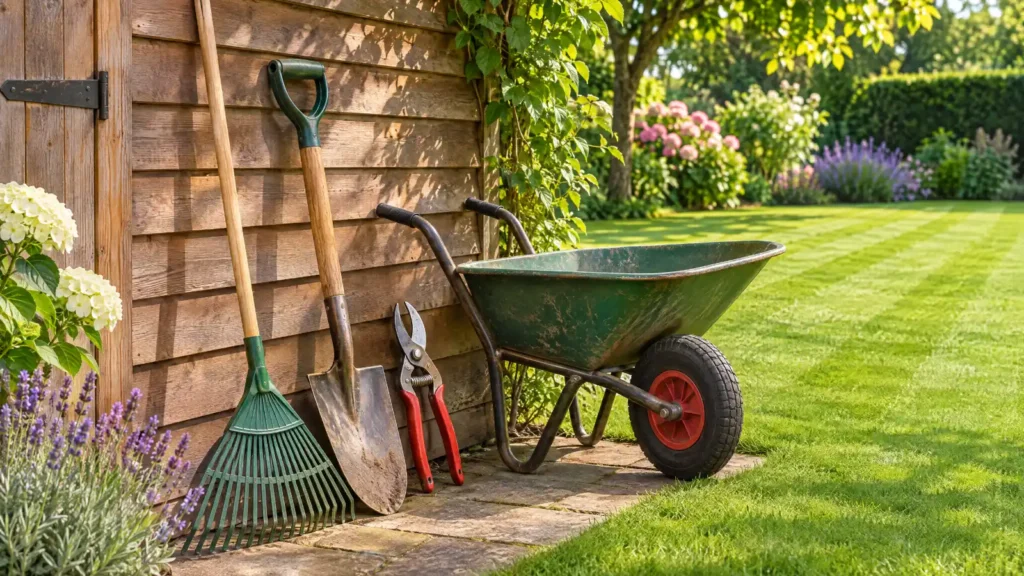
The landscaping tools worth owning are a short kit of hand tools, such as pruners, a spade, a shovel and two rakes, plus gloves and eye and hearing protection. Rent heavy one-job machines and hire out anything near power lines. Mowers alone were linked to an estimated 93,027 emergency room injuries in 2024, CPSC data show.
Late fall is a good moment to take stock. The leaves are mostly down, the mower is about to sit for the winter, and the spring sales have not started yet. Power equipment earns a spot in the garage only when your yard is big enough that the time it saves is real. The money mistakes are quieter than the injuries: a pricey machine bought for a job you will do once, or a deposit paid to a yard crew that never comes back.
What counts as landscaping tools, and how do the categories differ?
Yard tools sort into four working groups: hand tools you power yourself, motorized power tools, specialty tools built for one kind of project, and safety gear. Tree work gets its own row because it carries its own risks.
| Category | Common examples | What it does | Own, rent or hire? |
|---|---|---|---|
| Hand tools | Pruning shears, flat spade, round-point shovel, leaf rake, bow rake | Cutting stems, digging, moving soil, clearing debris | Own |
| Power tools | Push or riding mower, string trimmer, hedge trimmer, leaf blower | Repeated work over larger areas | Own if you use it most weeks in season |
| Specialty tools | Soil test kit, edger, hand tamper, plate compactor, stump grinder | Soil checks, clean bed lines, packing a patio base, stump removal | Own small items, rent heavy ones |
| Tree work | Pole pruner, chain saw | Cutting limbs and downed wood | Pole pruner from the ground; hire out tall trees and anything near lines |
| Safety gear | Work gloves, eye protection, hearing protection, closed-toe boots | Protects you while you work | Own before anything else |
A few names get mixed up at the store. A spade has a flat edge for cutting into soil and edging beds. A round-point shovel is shaped for scooping and lifting loose material. A leaf rake has light, flexible tines for gathering debris, while a bow rake has stiff metal tines for leveling soil before you plant. A tamper packs down a gravel or sand base so a patio or path does not settle unevenly.
What belongs in a starter yard kit?
For most home yards, this short list covers routine work. Buy the safety gear first, then the hand tools, and add power equipment only after a season tells you what you actually do every week.
- Work gloves, safety glasses, earplugs or earmuffs, and closed-toe boots with slip-resistant soles
- Bypass pruning shears for live stems
- A flat spade and a round-point shovel
- A leaf rake and a bow rake
- A pole pruner, so limb work stays on the ground
- An approved fuel container, if anything you own runs on gas
- A file or sharpener and a stiff brush for cleaning blades after use
Which yard tools cause the most injuries?
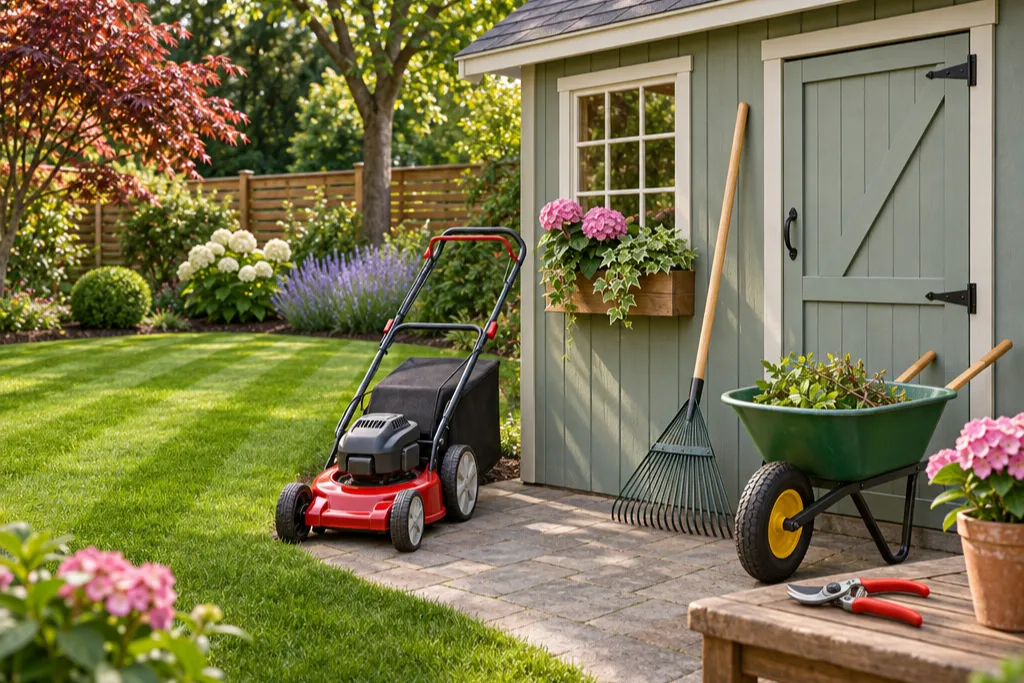
The CPSC’s 2024 NEISS data highlights estimate emergency department visits by product group. One injury can be counted in up to three groups, so the numbers should not be added together. Read them as a ranking of where care pays off.
| Product group (CPSC NEISS) | Estimated ER-treated injuries, 2024 |
|---|---|
| Ladders, stools | 274,767 |
| Lawn and garden equipment | 94,296 |
| Lawn mowers | 93,027 |
| Chain saws | 33,557 |
| Trimmers, small power garden tools | 27,192 |
The surprise for most people is the top row. Ladders and stools account for more estimated injuries than any yard product group on the list, and mowers sit near the top of the yard equipment.
How do you use mowers and power tools more safely?
Your ears need protecting too. CDC’s NIOSH noise page lists lawn mowers and power tools among equipment that can produce noise around 85 to 90 dBA, and its recommended exposure limit is 85 dBA averaged over an eight-hour workday. Keep earplugs or earmuffs in the same bin as your gloves, so you never have to go looking.
When should you put the ladder away and hire out the job?
Work from the ground with pole tools whenever you can. If a ladder is unavoidable, OSHA’s portable ladder safety card says to use it only on a stable, level surface, keep three points of contact while climbing and never stand on the top step unless it was built for that. It also says to keep metal ladders away from power lines.
Tall trees deserve a word of their own. Felling or climbing one combines a chain saw and a ladder, two of the riskiest product groups in the CPSC data, in a single job.
What should you check before you dig?
Fence posts, new beds, trees and patio bases all start with a hole. The Pipeline and Hazardous Materials Safety Administration’s safe digging page says to contact 811 before every dig, small home projects included, because hitting a buried utility line can cause injuries, outages and fines. Make the call before you rent the auger or buy the posts.
Bigger hardscape work can need approval as well. Patios, retaining walls and fences fall under local rules that vary by town, so check our guide on whether a project needs a permit before you book equipment.
What is the fine print behind “professional grade” tool marketing?
“Professional grade” is a marketing label with no official definition. Treat it as a claim to test against the warranty and the parts terms. The sticker price is only part of what a tool costs you, and we have no sourced price ranges to publish, so here is what drives the real cost instead.
| What drives the cost | What to check before you buy |
|---|---|
| Warranty registration | Some warranties start only once you register, so read the paperwork before the box and receipt go out |
| Wear parts | Blades, line and belts are often treated as consumables; ask which parts the warranty covers |
| Battery platform | Cordless tools usually run on one maker’s battery system, so the first purchase tends to lock in the brand |
| Upkeep | Gas engines need regular fuel and oil attention, and every blade needs cleaning and sharpening |
| Storage | A machine you own needs dry space for the off-season |
| How often you use it | A tool used most weeks pays for itself; a once-a-year machine rarely does |
Should you buy, rent or hire out?
| Approach | What you gain | What you give up | Good fit when |
|---|---|---|---|
| Buy | Tool on hand whenever you need it | Upfront cost, storage space, ongoing upkeep | You will use it often across seasons |
| Rent | Heavy gear without the purchase price | Pickup time and rental deadlines | One-time projects such as a patio base |
| Hire a crew | Their skill, labor and equipment | Higher cost per job, less control over timing | Work at height, near power lines or past your strength |
Run the math on one rental. Say a shop quotes $90 a day for a plate compactor and a store lists one for $720. These prices are made up for the arithmetic, so get local quotes. You would need eight rental days, $720 divided by $90, before buying breaks even, and that ignores storage and upkeep on a machine you own. If you expect one patio and one garden path over the next few years, renting wins easily.
The same logic sets the rest of your kit. Our home toolbox guide covers the indoor basics, and our guide on how to start DIY projects helps you match a first outdoor job to your skills.
Does spending more on equipment make yard work safer?
Not on its own. A well-made tool may fail less often, but where you stand matters more than what you paid. A hand pruner used with both feet on the ground carries far less fall risk than a premium hedge trimmer held overhead on a ladder. Fatigue builds over a long day whatever the handle design, so breaks and splitting heavy jobs across two days help more than an upgrade.
The same thinking applies to yard pest products. Identify the pest and fix standing water and other attractions before you buy a sprayer, the prevention-first approach our guide to pest control and the EPA IPM approach explains.
How are lawn and yard services sold?
I have spent 18 years in performance marketing, much of it around home services, and yard and storm cleanup offers run the same playbook as roofing and gutter offers. The ad exists to get a phone call fast, so it leans on urgency and free estimates instead of the actual scope of work. The price in the ad is rarely the price on the contract.
Once someone shows up, the FTC’s guide on how to avoid a home improvement scam is your checklist. Consider only licensed and insured contractors and confirm the license with your state or county. Get several written estimates that describe the work, materials, completion date and price, and ask why if one sits far from the others. Get a written contract with no blank spaces, do not pay the full amount up front, and if you sign at home, look for a written statement of your right to cancel within three business days.
What should you do before you buy tools or hire a crew?
- List your real jobs. Write down the yard tasks you do each season and how often, so you buy for your yard and not for an ad.
- Buy safety gear first. Gloves, eye protection, hearing protection and sturdy boots come before any power tool.
- Start with core hand tools. A pruner, a spade, a shovel and two rakes cover most routine work.
- Rent heavy specialty gear. Compare a rental quote with the purchase price, and count storage and upkeep.
- Contact 811 before digging, every time, posts and plantings included.
- Hire out the high-risk work. Limbs near power lines, tall trees and tall-ladder jobs go to trained crews.
Frequently asked questions
What landscaping tools should a homeowner own first?
Start with hand tools and safety gear: pruning shears, a flat spade, a round-point shovel, a leaf rake, a bow rake, work gloves, eye protection, hearing protection and sturdy boots. Add a mower or trimmer once you use one most weeks in season.
Is it better to rent or buy a plate compactor or tiller?
For most homeowners, renting. Divide the purchase price by the daily rental rate to find how many rental days it takes to break even, then add storage and upkeep. If you need the machine for one or two projects, renting usually wins.
How many people are hurt by lawn mowers each year?
CPSC estimates about 93,027 emergency room injuries tied to lawn mowers in 2024. Keep children indoors while you mow, clear the area of debris first and wear eye protection and slip-resistant shoes.
Do I need hearing protection to mow the lawn?
It is a good idea. NIOSH lists lawn mowers and power tools among equipment that can produce noise around 85 to 90 dBA, and its recommended exposure limit is 85 dBA averaged over an eight-hour workday.
Do I need to call 811 before planting a tree or setting fence posts?
Yes. Federal pipeline safety guidance says to contact 811 before every dig, including small home projects, because hitting a buried line can cause injuries, outages and fines.